Introduction
I had intended to study a short course in data science at General Assembly as I was seeing Machine Learning start to become a prominent topic. However it was a new course that wasn't yet available so I studied UX Design instead, preferring it over web development. It was complimentary to the Product Design course I'd done the previous Christmas at UAL and in retrospect a great choice. Design thinking and workshopping are arguably very underrated skills.My interests and background meant that I pursued a slightly different path to my classmates by focusing on a project that included both hardware and software. Something that had a place and utility in the physical world. Like Machine Learning and AI, the idea of useful wearables, particularly for payments, was also emerging. I contacted a number of companies to see where I might be able to find wearables, ending up with some very early devices including an NFC ring and a couple of other general NFC devices. Most importantly though I was given real wearable payment bracelets by Barclays, loaded with GBP and by CaixaBank, loaded with Euros. These devices were early and ugly, but they worked for gaining real insight into user preferences and use. There was a real difference in how men and women used and perceived these devices too, so that was one of the bigger surprises. It was the following year I did a small research project for a wearables company, Flicktek who were building an early device for computer use.
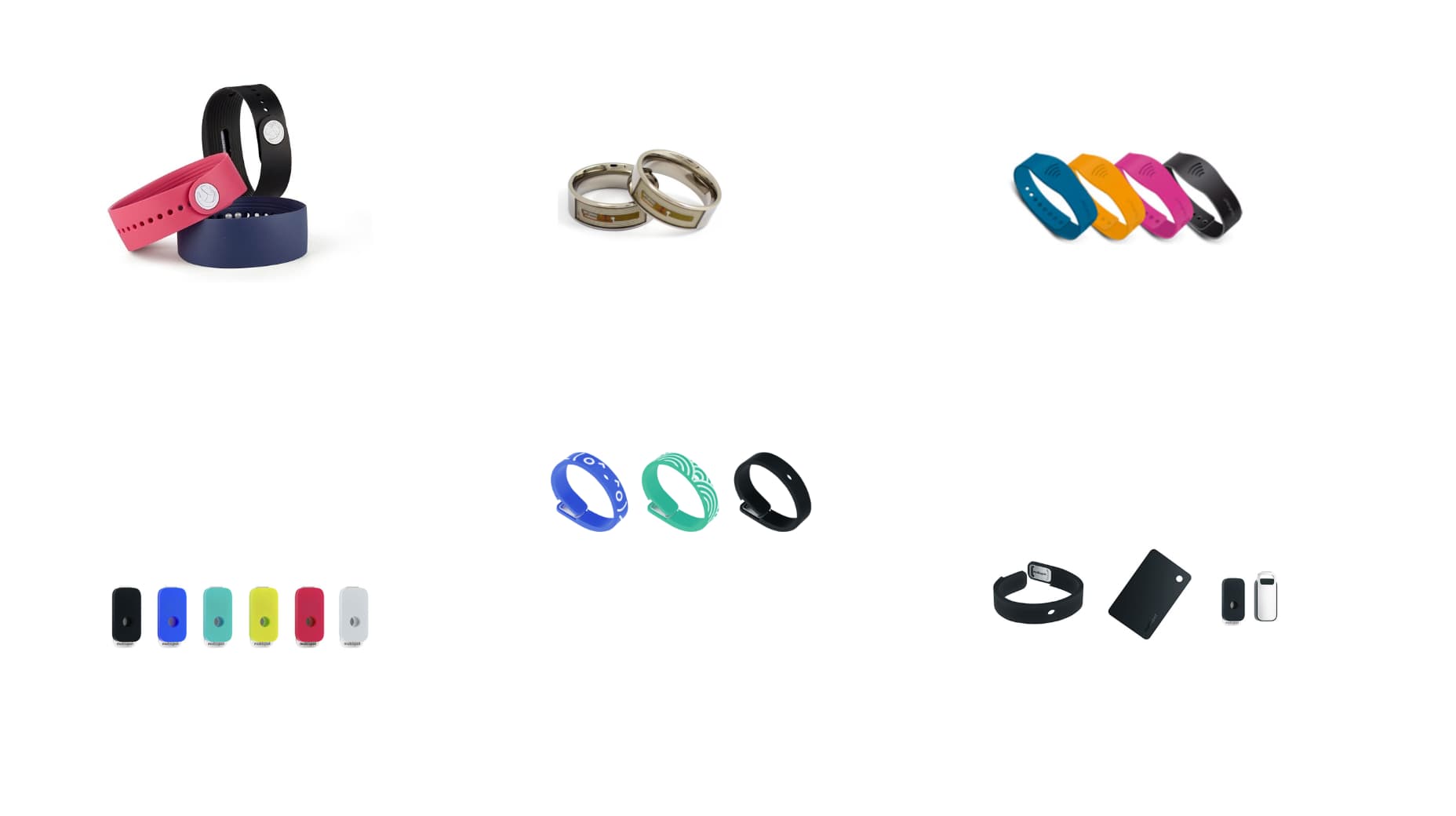
Wearables tested for this project.
The userflow of both travel and payments.
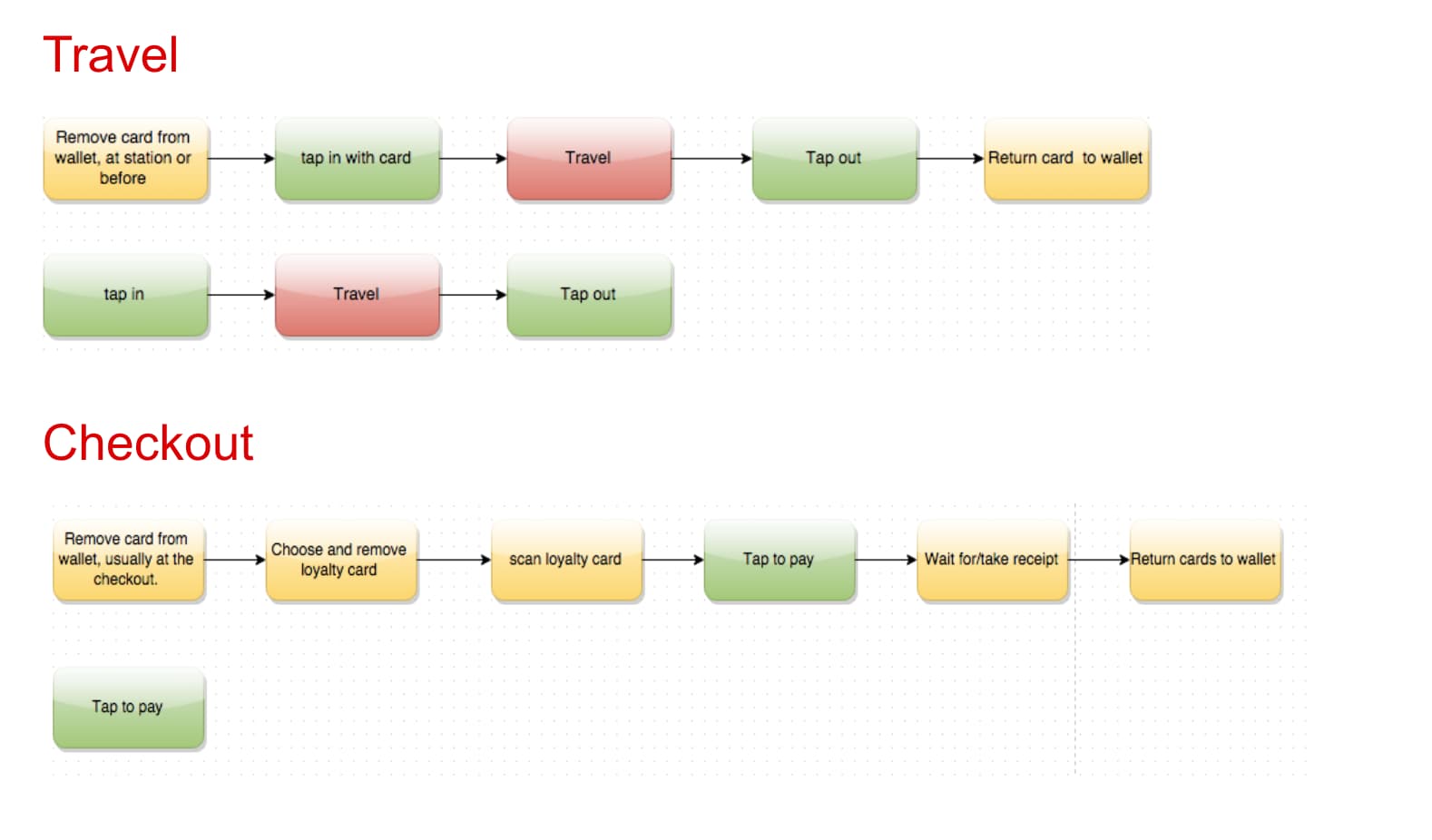
Wearable user flows
Impact of using wearables over a traditional wallet when shopping and commuting.

Impact
Information Architecture diagram for a mobile application.
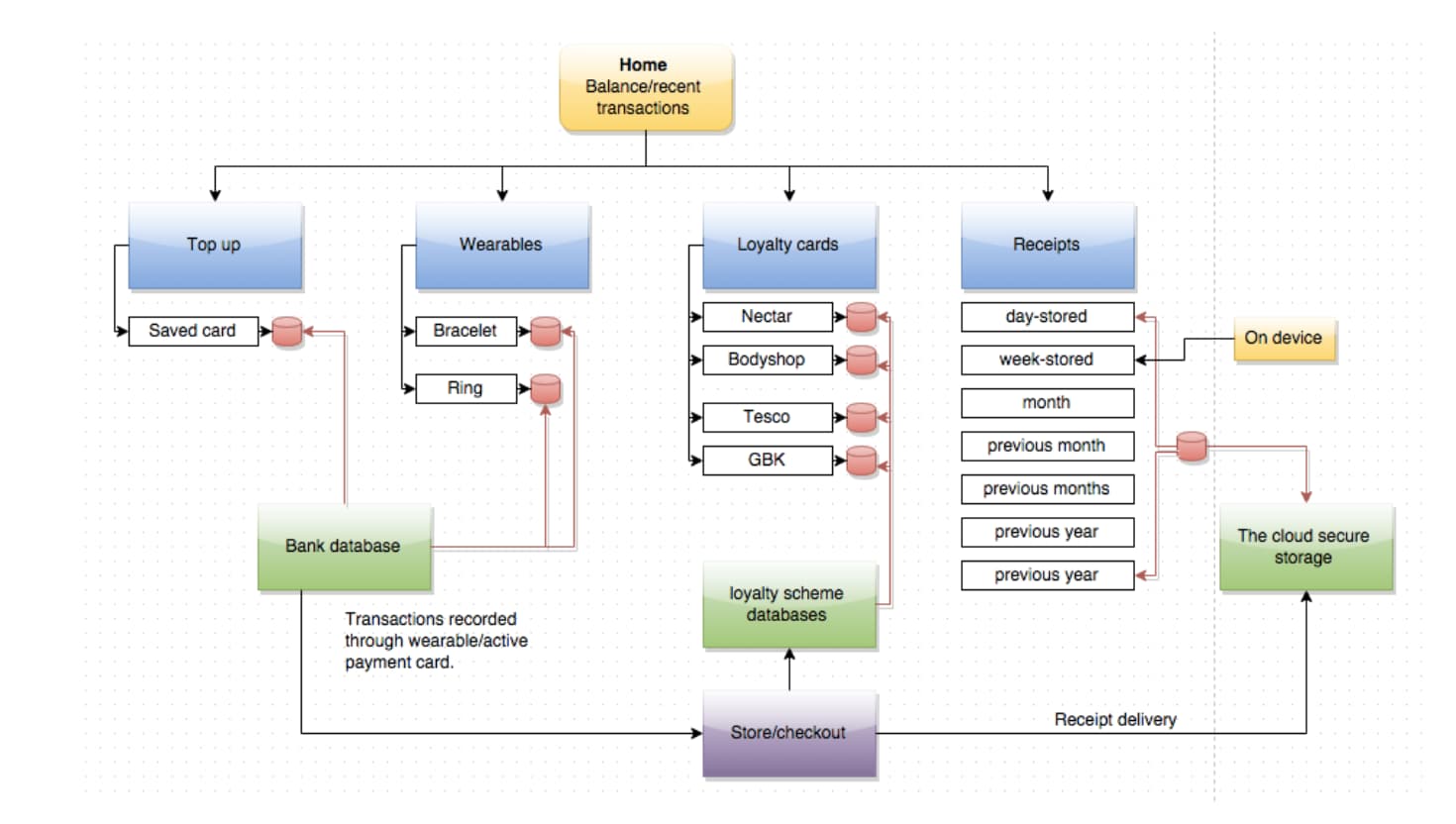
IA digram for app
Is there added value in the creation of a mobile app.
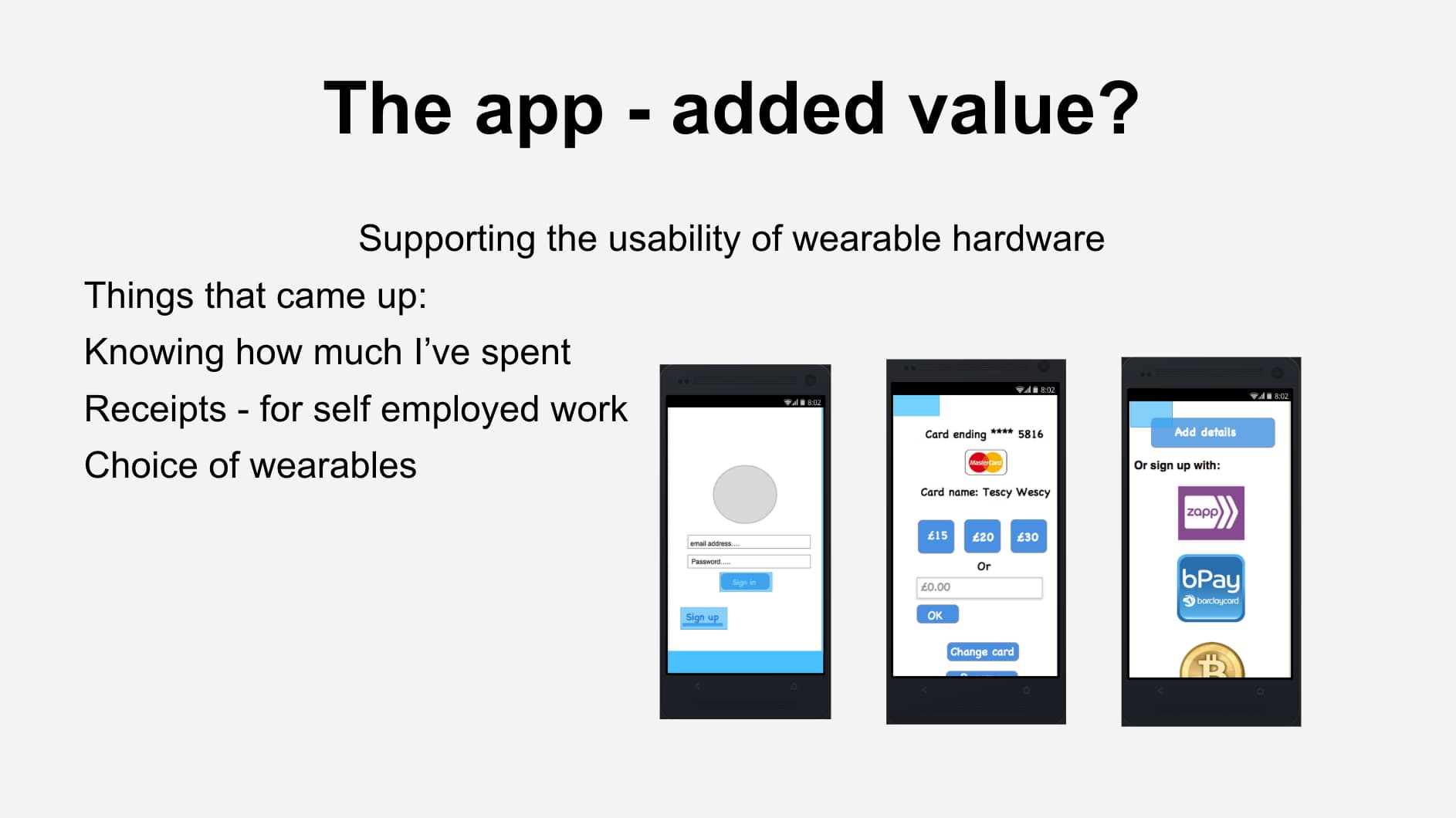
App sign up pages
Mobile app navigation, top up and payment pages.

App main pages
Mobile app pages for loyalty cards and choice of wearables.
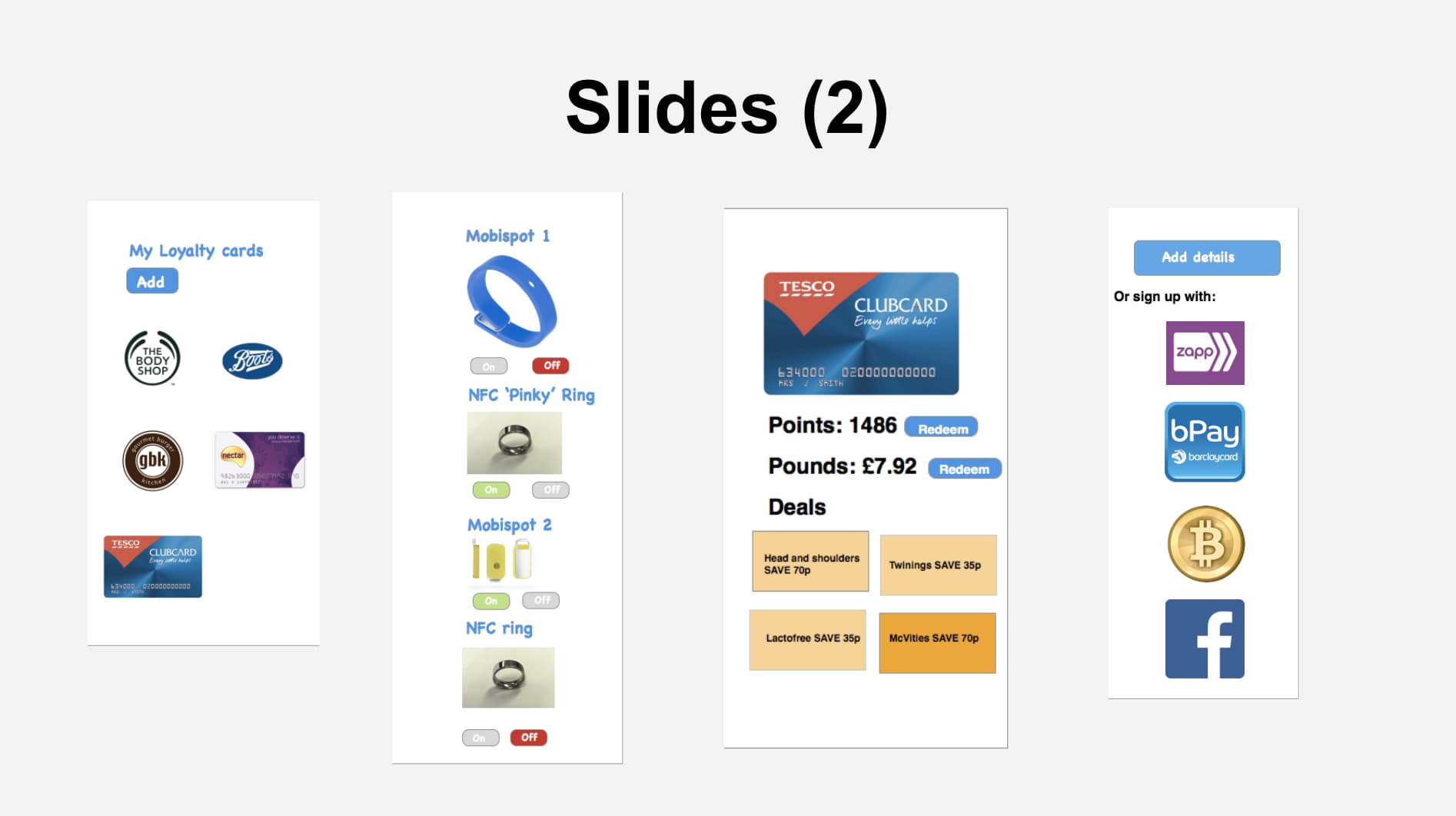
App pages 2